
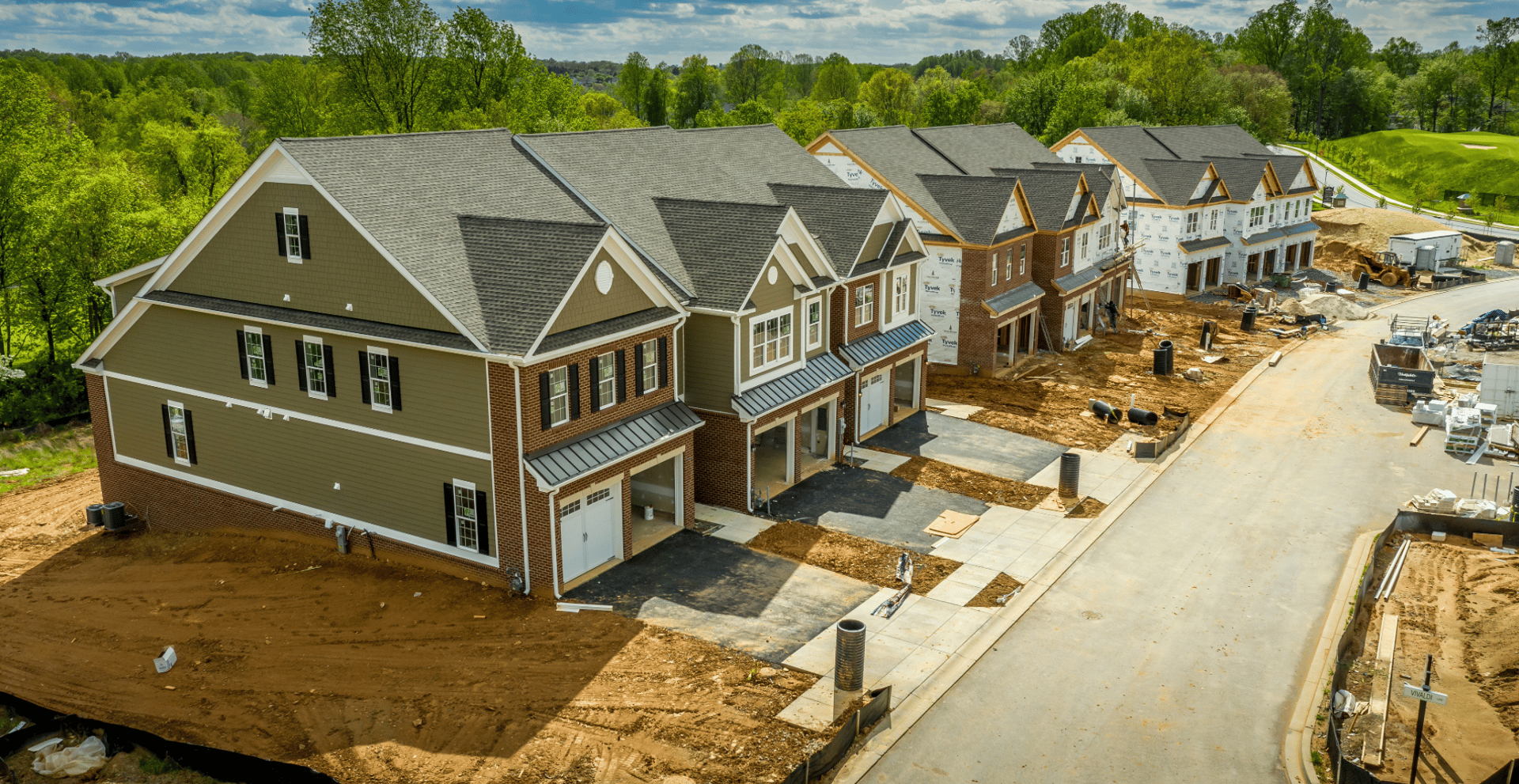
Construction Loans
Power your new builds with flexible construction financing.
Easy Financing for Builders
Construction Loans from Cape Henry Capital are tailored to fund new construction or major development projects, providing flexible financing solutions for single-family homes, multi-unit developments, build-to-rent, and build-to-flip properties. These loans support projects ranging from single vacant parcels or tear-downs to comprehensive multi-lot developments.
Underwriting Requirements
Leverage
Up to 85% LTC
Up to 70% ARV
Property Types
Non-owner occupied or Vacant
1-4 unit residential
Condo, Townhome, Single-Family, Du/Tri/Quad - Plex
Loan Amounts
Minimum $200,000
Maximum $20,000,000
Minimum Credit Score
680
Available Terms
12, 18 & 24 Months
Interest Only
Only Pay Interest on Used Funds
Ground-Up
Tear Down
Single-Lot
Development
Loan Types
The Build-to-Rent Investor
You're not building to sell, you're building to hold. The build-to-rent strategy lets you create a rental asset from the ground up, with modern finishes, no deferred maintenance, and a property that was designed for long-term tenancy from day one. Rather than overpaying for a turnkey rental in a competitive resale market, you're controlling the cost basis, the layout, and the quality of the finished product.
Cape Henry Capital funds ground-up construction for build-to-rent investors, including single-family homes, duplexes, triplexes, and quads. Funds are released through a draw schedule as each phase of construction is completed and verified. At project completion, the natural exit is a refinance into a long-term DSCR Rental Property Loan, qualifying based on the rental income the new property generates rather than your personal income or tax returns.
Best for: Investors building new residential rental properties with a long-term hold strategy and a refinance exit.
The Build-to-Flip Investor
Speed and cost basis are everything in this strategy. You're acquiring a lot, or a teardown, building a market-ready home, and selling at a profit before the next project begins. The construction loan funds land acquisition and the full build cost, with draws released as construction milestones are hit. Interest accrues only on drawn funds, which keeps your carrying costs tight while the home is being built.
The most critical number in a build-to-flip deal is the After Repair Value, or in this case, the After Construction Value (ACV). Cape Henry Capital lends up to 70% of ACV, meaning your project needs genuine market upside to qualify. If the numbers work, we move fast, because in build-to-flip, the project that closes first wins.
Best for: Builders and investors with a defined lot, a permitted plan, and a sale exit at project completion.
The Teardown and Rebuild Investor
The house is functionally obsolete, the bones are bad, the layout doesn't work, or the renovation cost exceeds what a rebuild would run. Instead of throwing renovation dollars at a property that can't be saved, you tear it down and start fresh. The lot retains its value, the location stays the same, and you build a product the market actually wants.
Cape Henry Capital finances teardown and rebuild projects under the same construction loan structure as ground-up builds. The existing structure's value is factored into the overall deal analysis, and the loan funds both the demolition cost and the full construction budget through a draw schedule. This is one of the cleanest ways to unlock value in established neighborhoods where land is scarce and dated homes are abundant.
Best for: Investors or builders in supply-constrained markets where teardown lots offer a lower-cost path to a new build than raw land acquisition.
The Development Investor
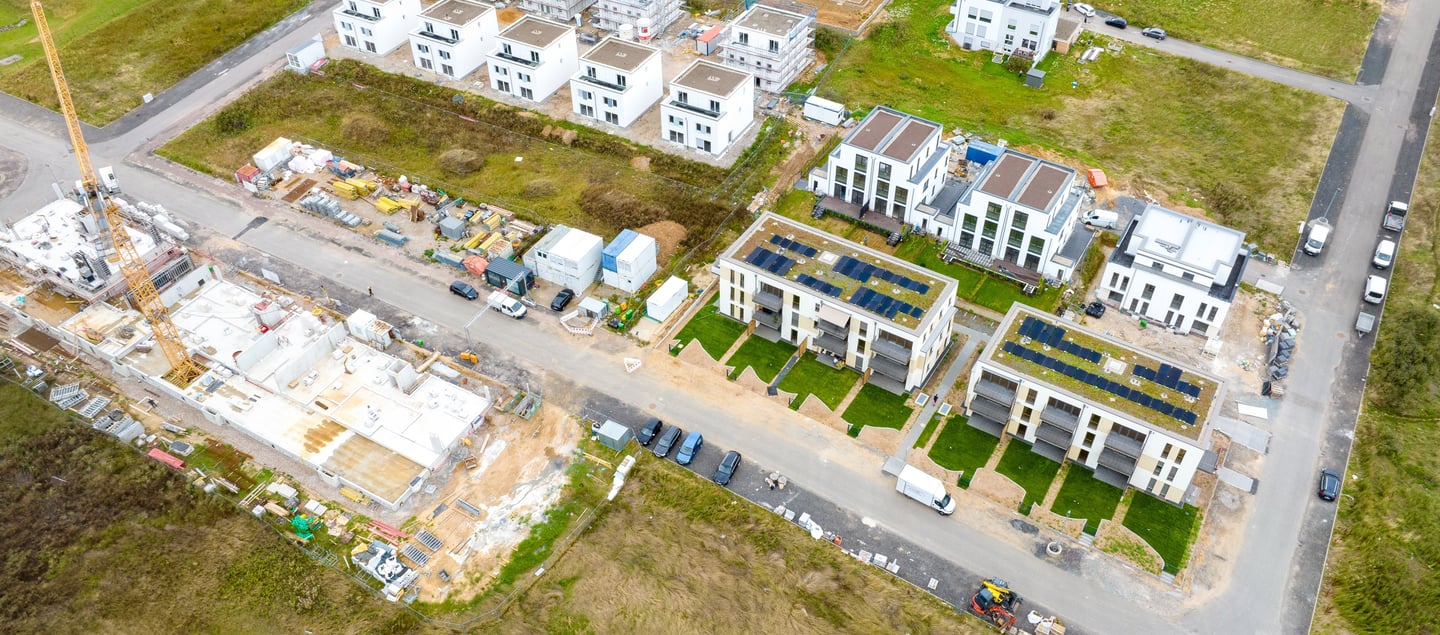
You're not working one lot, you're working a subdivision, a multi-lot assemblage, or a planned development with multiple units. This is where construction lending gets more complex, and where lender experience matters most. Larger projects require phased draw schedules, careful budget management, and a lender who understands how to structure financing across a multi-unit build without creating cash flow bottlenecks mid-project.
Cape Henry Capital funds residential development projects up to $20,000,000, including multi-lot single-family developments, townhome communities, and small apartment builds up to 4 units per structure. Whether your exit is a bulk sale, unit-by-unit retail sales, or a long-term hold as a rental portfolio, we structure the financing around your development plan.
Best for: Builders and developers working multi-lot projects, planned subdivisions, or multi-unit residential developments with a defined project budget and phased timeline.
Not Sure If Your Project Qualifies?
Construction deals are more deal-specific than any other loan type. If your project doesn't fit neatly into one scenario above, a mixed-use infill, a non-standard lot configuration, an ADU addition, or a partial teardown, bring it to us before you assume it won't work. Schedule a free consultation and we'll give you a straight answer on structure, leverage, and timeline.
Is a Construction Loan Right for You?
Construction financing isn't just for large developers. Whether you're building a single home on an empty lot or managing a multi-lot subdivision, Cape Henry Capital structures construction loans around the specifics of your project, the land, the build cost, the timeline, and how you plan to exit. Here's who these loans are built for.
Frequently Asked Questions About Construction Loans
What is the difference between a construction loan and a bridge loan?
A construction loan funds new builds from the ground up, it's designed for projects where the property either doesn't exist yet or is being completely rebuilt. A bridge loan funds the acquisition and renovation of an existing structure. The core mechanics are similar: both use draw schedules, both are interest-only, and both are short-term. The key difference is the scope. If you're building new or doing a full teardown and rebuild, that's a construction loan. If you're buying a property that needs renovation but the structure is staying, that's a bridge loan. If you're unsure which applies to your project, a quick conversation will clarify it.
How does the construction draw schedule work?
Construction funds are not released all at once at closing. Instead, they're held in a dedicated account and disbursed in stages as each phase of construction is completed, foundation, framing, rough mechanicals, drywall, finishes, and final completion. After each phase is finished, an inspection is conducted to verify progress. Once approved, the next draw is released. You only pay interest on funds that have been drawn to date, which keeps carrying costs manageable throughout the build. Draw schedules are structured at closing based on your construction budget, timeline, and contractor's scope of work..
What is the difference between build-to-rent and build-to-flip financing?
The construction loan structure is the same for both, draws, interest-only payments, short-term. The difference is the exit strategy, which shapes how the deal is underwritten. For build-to-flip, the lender focuses on the After Construction Value and your ability to sell at a profit within the loan term. For build-to-rent, the lender also considers the projected rental income and your plan to refinance into long-term financing at completion. If you're building to rent, plan for a DSCR Rental Property Loan as your exit from the construction loan, it's the most common and most efficient path for investors holding new builds as rentals.
Can I finance a teardown and rebuild with a construction loan?
Yes. Teardown and rebuild projects are eligible under Cape Henry Capital's construction loan program. The existing structure's value, demolition costs, and full rebuild budget are all factored into the overall loan analysis. Leverage is based on up to 85% of the total cost to complete the project and up to 70% of the After Construction Value, whichever is lower. Demolition must typically be completed before the first construction draw is funded, though the specifics depend on the project structure.
Do I need to already own the land to apply for a construction loan?
No. Cape Henry Capital's construction loans can fund both the land acquisition and the construction costs in a single loan. If you're purchasing a vacant lot or a teardown property, the land purchase can be included in the overall loan structure. If you already own the land free and clear, that equity can often be used to reduce the cash required at closing. Either way, the underwriting is based on the total cost of the project relative to the finished value, not just the construction budget in isolation.
What experience level is required to qualify for a construction loan?
Construction loans carry more complexity than renovation or rental loans, and lender experience requirements reflect that. A minimum credit score of 680 is required, and prior construction or development experience strengthens your application significantly. That said, experience requirements vary based on project size and complexity, a single infill lot with a licensed general contractor is evaluated differently than a 10-lot subdivision. If you're newer to ground-up construction but have a strong GC, a detailed project plan, and a clear exit strategy, bring the deal to us and we'll tell you exactly where you stand.
Get In Touch
Contact Cape Henry Capital for tailored financing solutions and educational resources to empower your investments.
Tailored loans for real estate investors.
info@capehenrycapital.com
p. 757-267-9495
© Cape Henry Capital, LLC. 2023 All Rights Reserved. NMLS # 2383447.
Capehenrycapital.com is a website operated Cape Henry Capital, LLC, a Delaware limited liability company (“Cape Henry Capital”). By accessing this site and any pages thereof, you agree to be bound by our terms of use and privacy policy. The use of this website does not constitute an application for a mortgage loan or an offer by Cape Henry Capital to lend.
Cape Henry Capital is a mortgage broker and not a lender. Cape Henry Capital is licensed in FL,GA,PA,SC,TX. Please visit www.nmlsconsumeraccess.org for more licensing information.
Mortgage loan products referenced in this website are offered to qualified borrowers for business or commercial purposes only and may be secured by non-owner-occupied properties only.
Origination fees and other fees may apply. Financing is subject to certain restrictions and requirements including, but not limited to, due diligence, credit evaluation, and approval of the subject property. To qualify, borrowers must meet underwriting requirements. Not all borrowers will qualify and not all borrowers that qualify will receive the lowest rate. The actual loan rate and terms depend on a variety of factors. Actual rates, terms, and conditions are subject to change from time to time without notice.
Cape Henry Capital’s principal business address is 500 Studio Drive, Suite 101, Virginia Beach, VA 23452


1340 N. Great Neck Road, Suite 1272, #191 Virginia Beach, VA 23454